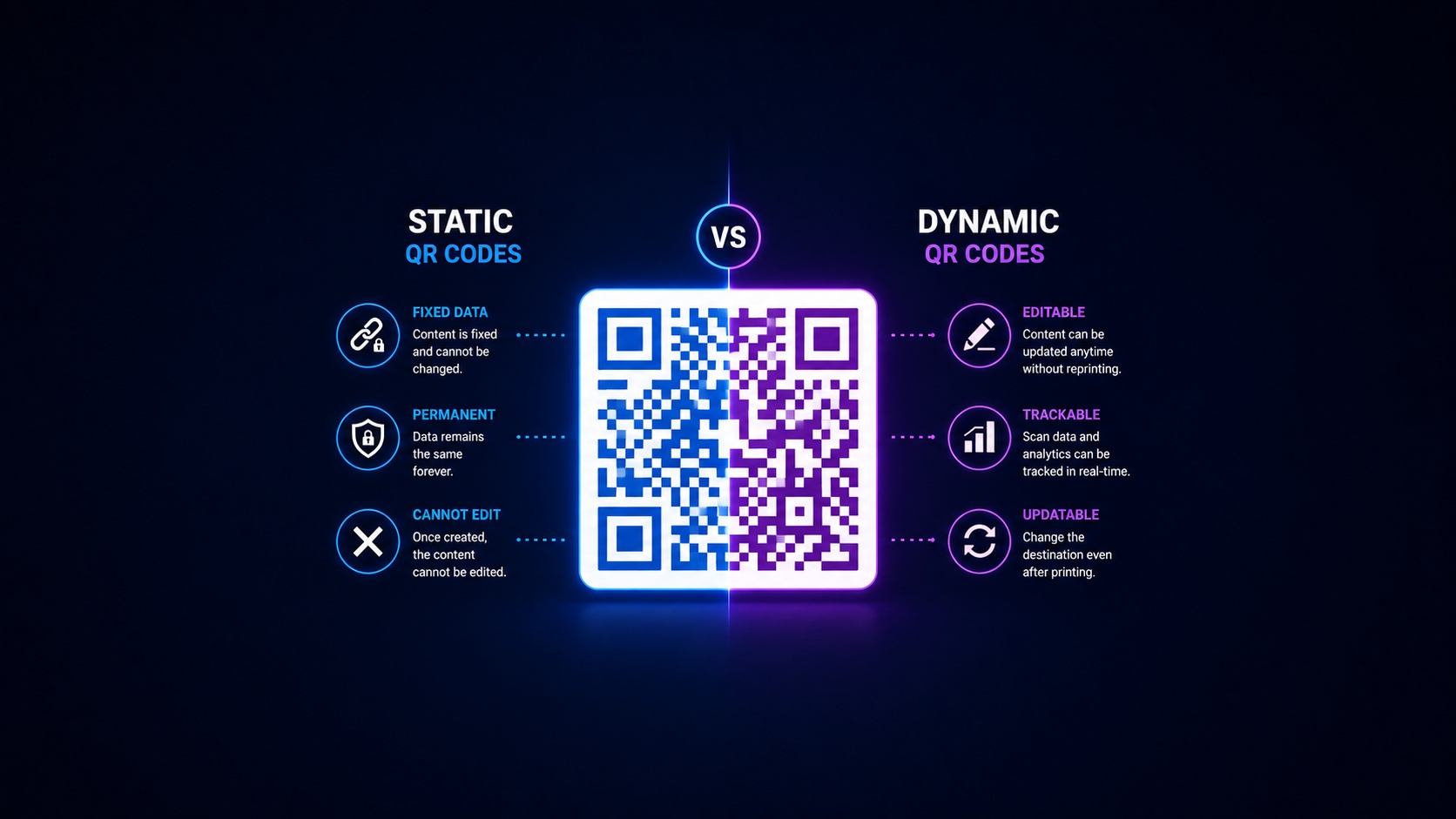
Static vs Dynamic QR Codes
June 13, 2026
When creating a QR code, one of the most important decisions is choosing between a static QR code and a dynamic QR code. While both look similar when scanned, they function very differently behind the scenes.
Understanding the strengths and limitations of each type can help you choose the best solution for your project, business or marketing campaign.
What Is a Static QR Code?
A static QR code stores information directly inside the QR code itself. Once generated, the content cannot be changed without creating a completely new QR code.
Static QR codes are ideal for permanent information that is unlikely to change over time.
Advantages of Static QR Codes
- Completely free to create and use
- No ongoing subscription required
- Works forever once generated
- Simple and reliable
- Perfect for personal projects
Limitations of Static QR Codes
- Content cannot be edited after creation
- No scan tracking or analytics
- Destination links cannot be updated
- Requires replacement if information changes
What Is a Dynamic QR Code?
A dynamic QR code contains a short redirect link instead of the final destination. This allows the destination to be changed even after the QR code has been printed or shared.
Dynamic QR codes are commonly used by businesses that need flexibility, analytics and campaign tracking.
Advantages of Dynamic QR Codes
- Edit destinations without changing the QR code
- Track scans and user engagement
- Update campaigns instantly
- Ideal for marketing and business use
- Supports advanced analytics
Limitations of Dynamic QR Codes
- Usually requires a QR code service provider
- May involve subscription costs
- Dependent on the provider's infrastructure
Which One Should You Choose?
If your content will never change and you simply need a QR code that works forever, a static QR code is usually the best choice.
If you need flexibility, analytics, marketing insights or the ability to update content later, a dynamic QR code is often worth the additional cost.
Common Use Cases
Static QR Codes
- WiFi access
- Contact information
- Personal websites
- Permanent business information
Dynamic QR Codes
- Marketing campaigns
- Restaurant menus
- Event promotions
- Product packaging
- Scan analytics and tracking
Final Thoughts
Both static and dynamic QR codes have their place. Static codes offer simplicity and permanence, while dynamic codes provide flexibility and powerful tracking capabilities.
For most personal uses, static QR codes are sufficient. For businesses and marketers, dynamic QR codes often deliver far greater long-term value.
Ready to create your own QR code? Try our free QR Generator and get started in seconds.